 Bridge Construction Hub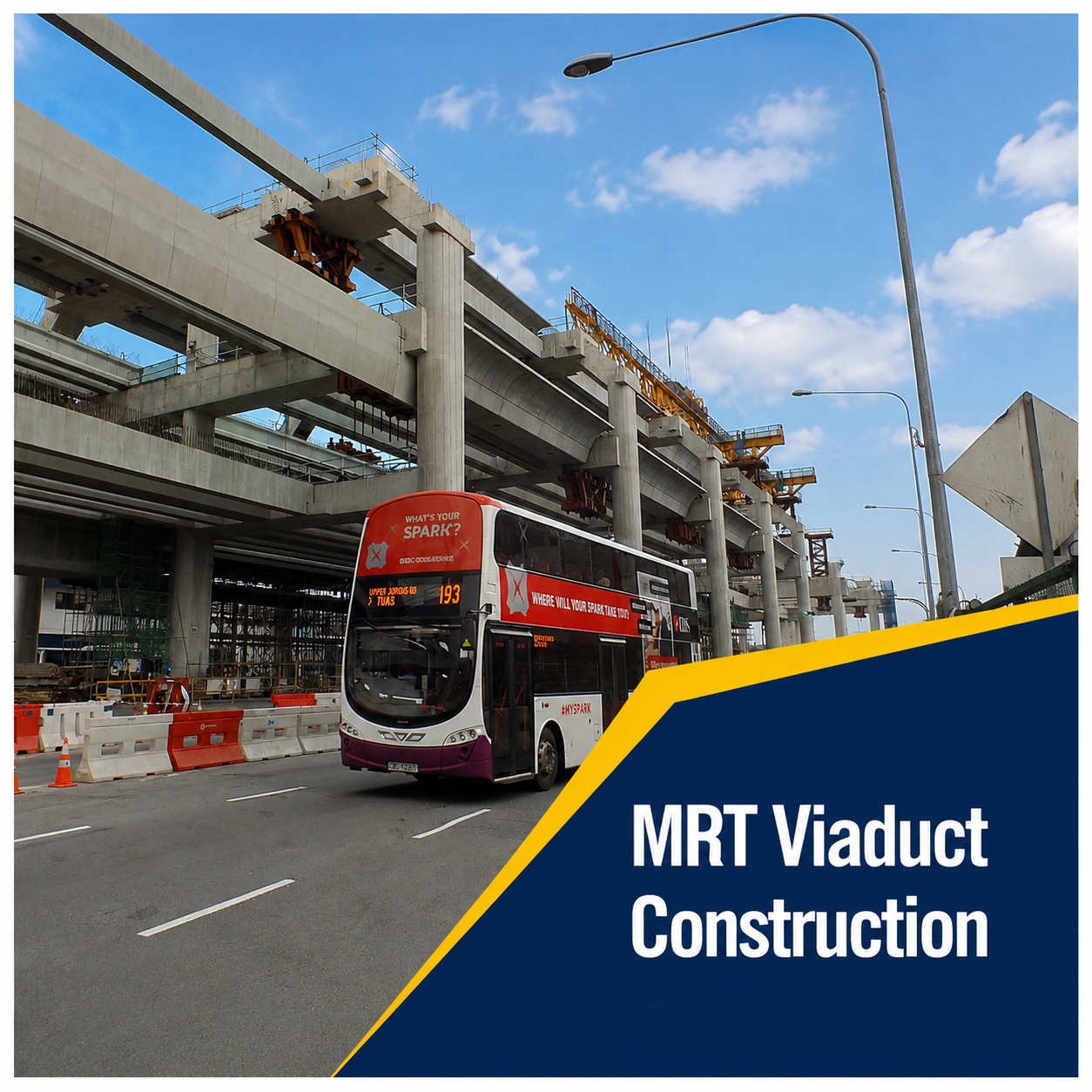
MRT & Metro Viaduct Construction
Building Efficient Urban Transportation Infrastructure
MRT and metro viaduct construction is a highly specialized engineering process designed to build elevated railway systems in densely populated urban environments.
Unlike conventional bridge projects, metro viaduct construction requires strict control of limited construction space, traffic impact, noise, safety risks, and urban environmental conditions.
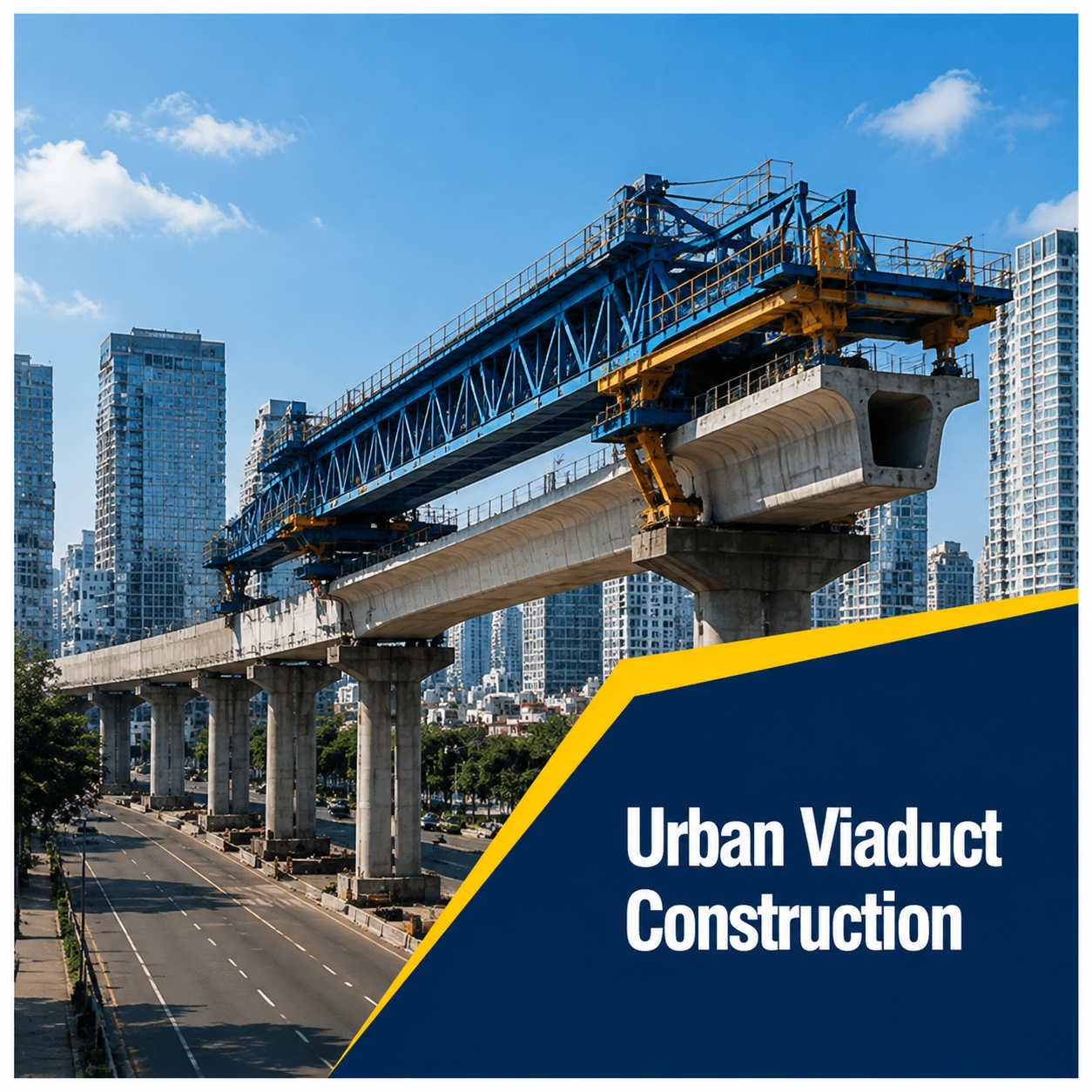
The use of precast concrete segments, segment erection technology, and launching gantry systems enables efficient construction while minimizing disturbance to surrounding communities.
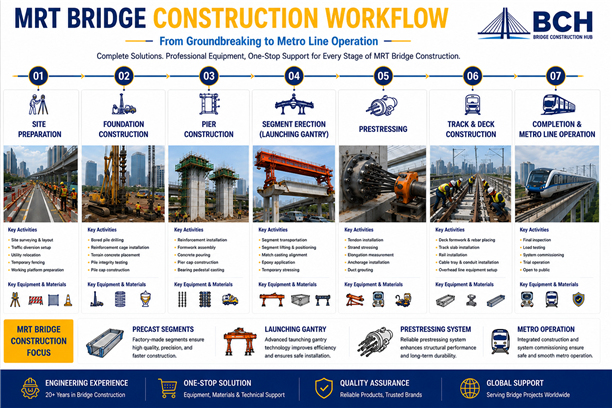
Bridge Construction Hub provides engineering knowledge, construction equipment, and procurement solutions covering every stage of MRT and metro viaduct construction — from urban site preparation to segment erection and final system completion.
1. Site Preparation
Overview
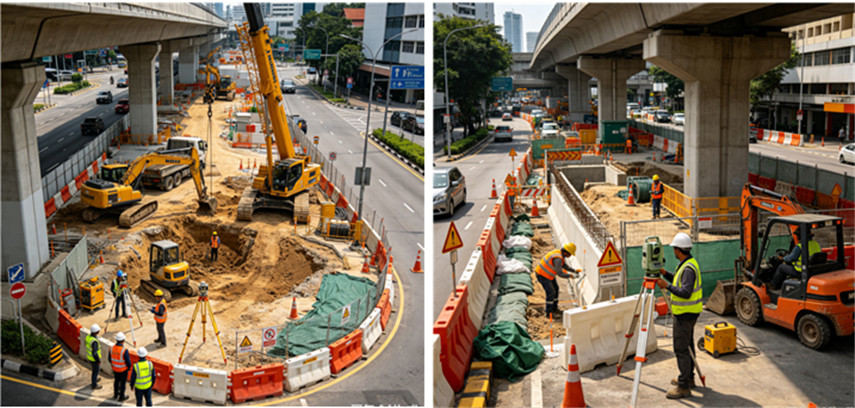
Site preparation for MRT and metro viaduct projects is carried out in complex urban environments where construction space is often limited.
Engineers must carefully organize traffic management, temporary access, utility protection, and construction zones while maintaining safe operation of surrounding roads and facilities. Proper planning during this stage reduces disruption and creates safe conditions for continuous viaduct construction.
Key Activities
Urban Site Survey
Traffic Diversion Planning
Utility Protection and Relocation
Temporary Construction Area Setup
Night Construction Preparation
Access Route Arrangement
Safety Barrier Installation
Construction Layout
Main Equipment
Survey Equipment
Excavators
Mobile Cranes
Traffic Management Equipment
Small Construction Machinery
Main Materials
Temporary Barriers
Safety Fencing
Warning Signs
Geotextile
Temporary Road Materials
2. Foundation Construction
Overview
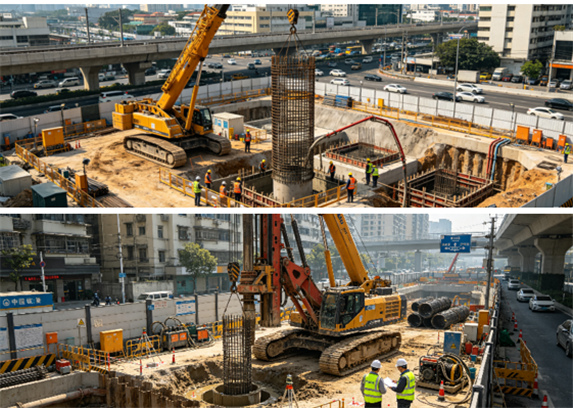
MRT viaduct foundations transfer loads from piers and elevated structures safely into the ground.
Due to limited urban space, foundation works often require compact equipment, strict vibration control, and careful coordination with existing buildings, roads, and underground utilities. High-quality foundation construction ensures long-term stability and safe metro operation.
Key Activities
Geological Investigation
Bored Pile Construction
Reinforcement Cage Installation
Concrete Pouring
Pile Testing
Pile Cap Construction
Underground Utility Protection
Main Equipment
Rotary Drilling Rig
Crawler Crane
Concrete Pump
Rebar Processing Equipment
Excavator
Main Materials
Reinforcing Steel
Concrete
Cement
Bentonite
Anchor Bolts
3. Pier Construction
Overview
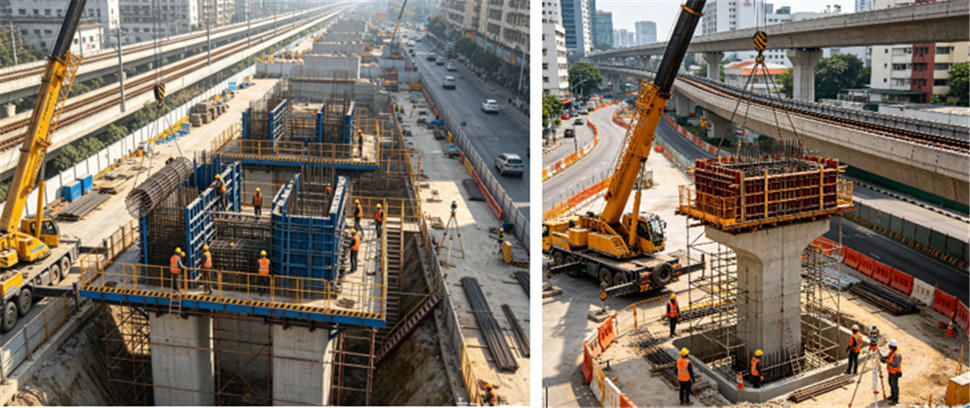
Metro viaduct piers support elevated railway structures above urban roads and public areas.
Because construction takes place in restricted spaces, pier construction requires accurate alignment control, efficient formwork systems, and strict safety management.
The final pier position directly affects segment erection accuracy and railway alignment.
Key Activities
Reinforcement Installation
Pier Formwork Assembly
Concrete Casting
Concrete Curing
Bearing Pedestal Construction
Vertical Alignment Inspection
Main Equipment
Mobile Crane
Concrete Pump
Formwork System
Scaffolding
Survey Equipment
Main Materials
Reinforcing Steel
High Strength Concrete
Formwork Panels
Bearing Plates
Embedded Components
4. Segment Erection
Overview
Segment erection is the most important construction stage for MRT and metro viaduct projects.
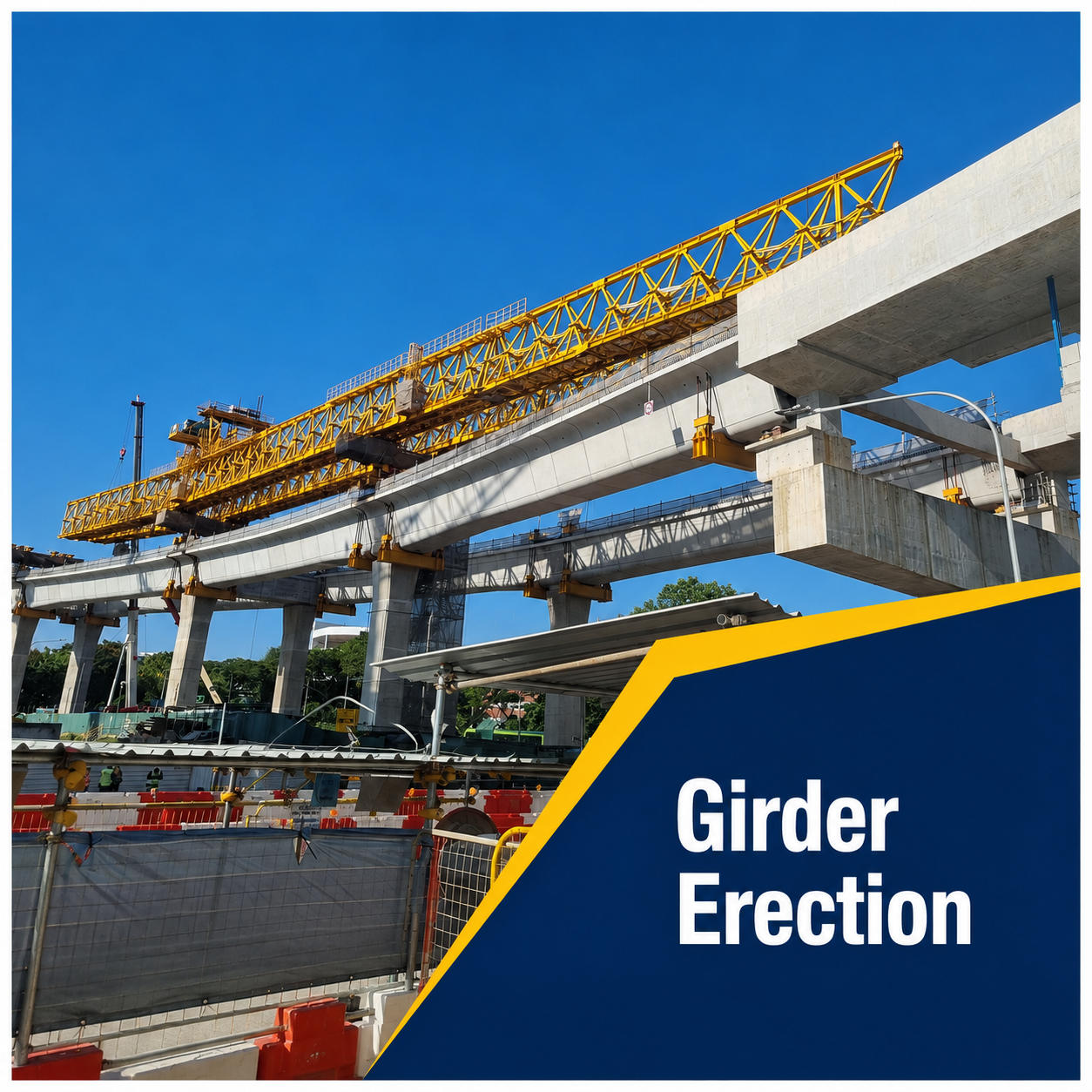
Precast concrete segments are manufactured in controlled factories, transported to the construction site, and installed using specialized erection equipment such as launching gantries. This method allows rapid construction with minimal impact on busy urban areas.
Key Activities
Segment Production
Segment Transportation
Launching Gantry Installation
Segment Lifting
Segment Positioning
Epoxy Bonding
Temporary Fixing
Alignment Adjustment
Main Equipment
Launching Gantry
Segment Transport Trailer
Hydraulic Jack
Gantry Crane
Survey Equipment
Main Materials
Precast Concrete Segment
Epoxy Adhesive
Bridge Bearing
Prestressing Strand
Grouting Material
5. Prestressing
Overview
Prestressing connects concrete segments into a continuous structural system and improves strength, durability, and resistance against repeated train loading.
Hydraulic stressing equipment is used to tension steel strands and permanently lock the structure together.
Key Activities
Tendon Installation
Steel Strand Installation
Hydraulic Stressing
Elongation Measurement
Anchorage Installation
Duct Grouting
Quality Inspection
Main Equipment
Hydraulic Jack
Hydraulic Pump
Stressing Equipment
Grouting Pump
Measuring Instruments
Main Materials
Prestressing Steel Strand
Anchorage System
Wedges
HDPE Duct
Grouting Material
6. Deck & Track Construction
Overview
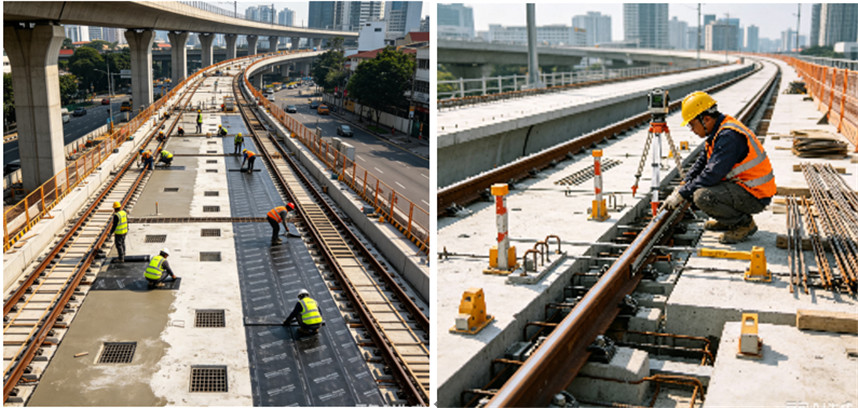
The deck construction stage prepares the final structure for metro operation.
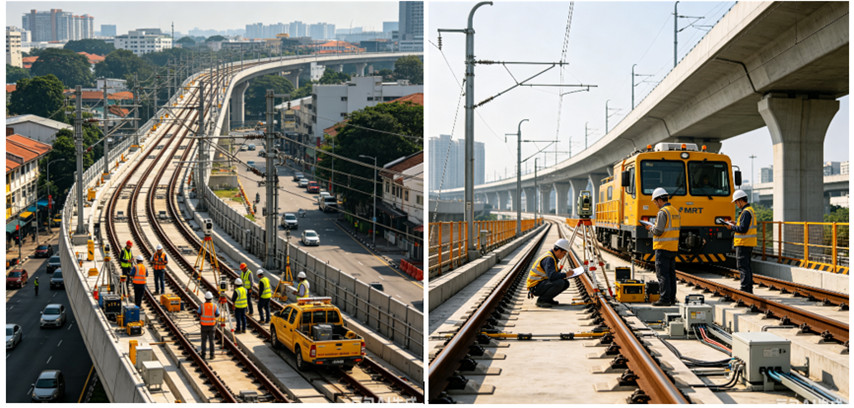
Works include deck finishing, waterproofing, drainage installation, track slab construction, and railway system interfaces.
High accuracy is required to ensure passenger comfort and safe train operation.
Key Activities
Deck Finishing
Waterproofing
Drainage Installation
Track Slab Construction
Rail Installation Preparation
Safety Barrier Installation
Main Equipment
Concrete Finishing Machine
Survey Equipment
Lifting Equipment
Track Installation Tools
Main Materials
Concrete
Waterproof Membrane
Track Slab
Drainage System
Expansion Joint
7. Completion & Metro Operation
Overview
The completion stage includes final inspection, structural testing, railway system integration, and project handover.
Engineers verify that the MRT viaduct meets safety requirements, operational standards, and urban transportation needs before opening to passengers.
Key Activities
Structural Inspection
Load Testing
Track Alignment Check
Signal System Testing
Electrical System Testing
Final Acceptance
Project Handover
Main Equipment
Inspection Equipment
Survey Instruments
Testing Equipment
Maintenance Vehicle
Main Materials
Railway System Components
Signaling Equipment
Safety Equipment
Expansion Joint System