 Bridge Construction Hub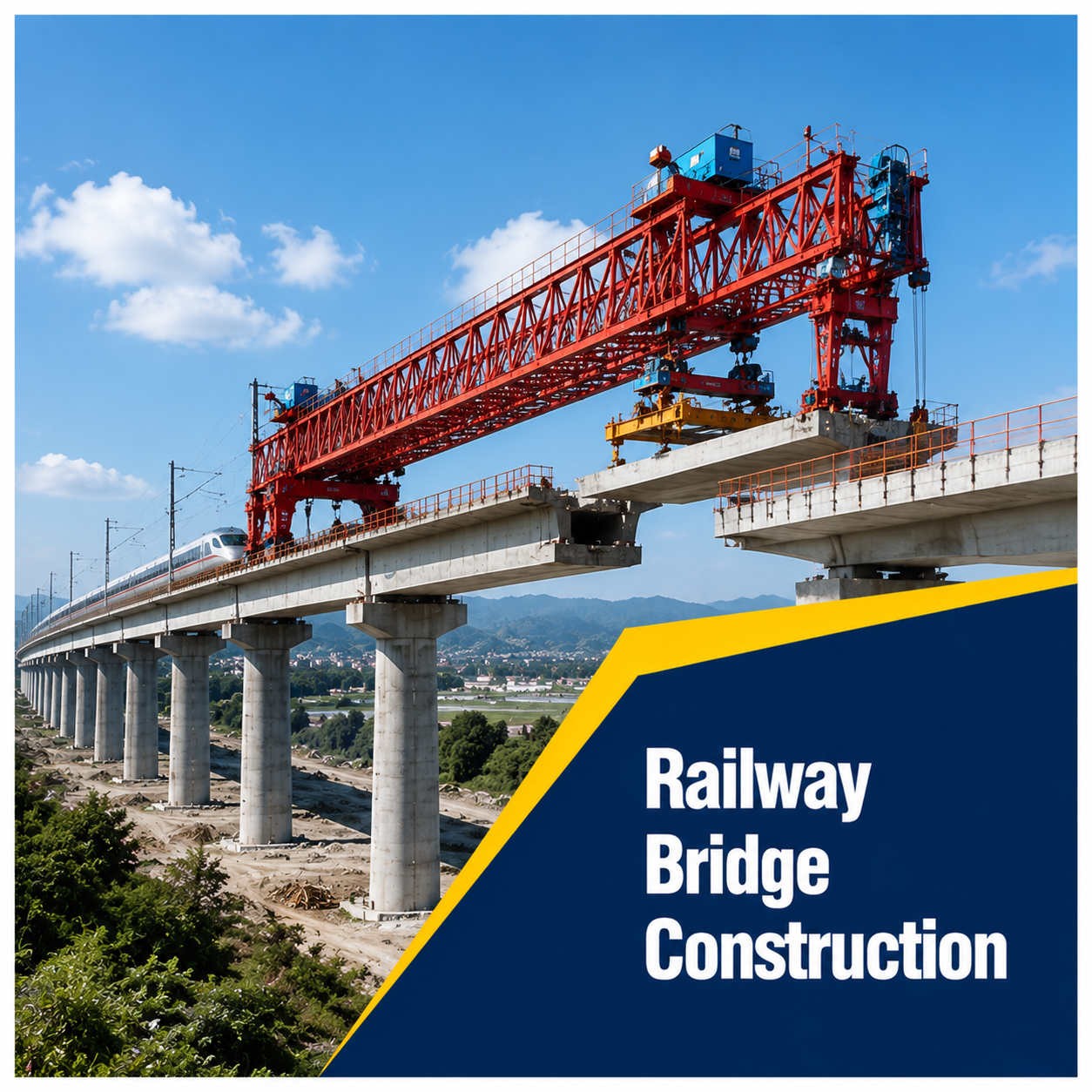
Railway Bridge Construction
From Groundbreaking to Railway Operation
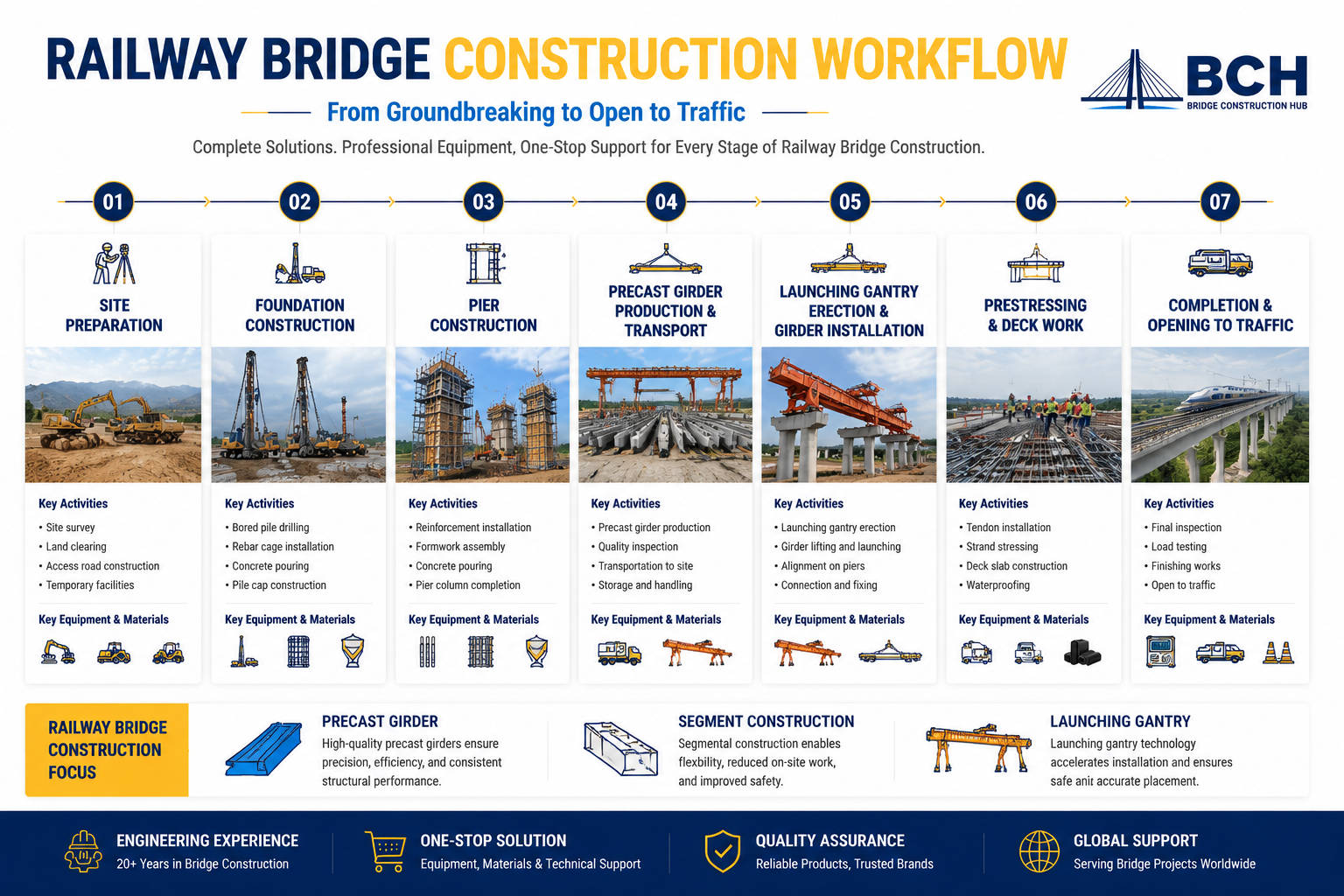
Railway bridge construction is a highly precise engineering process designed to provide safe, durable, and reliable infrastructure for high-speed railways, conventional railways, and urban rail transit systems.Compared with highway bridges, railway bridges require stricter requirements for structural deformation control, alignment accuracy, vibration performance, and long-term durability.
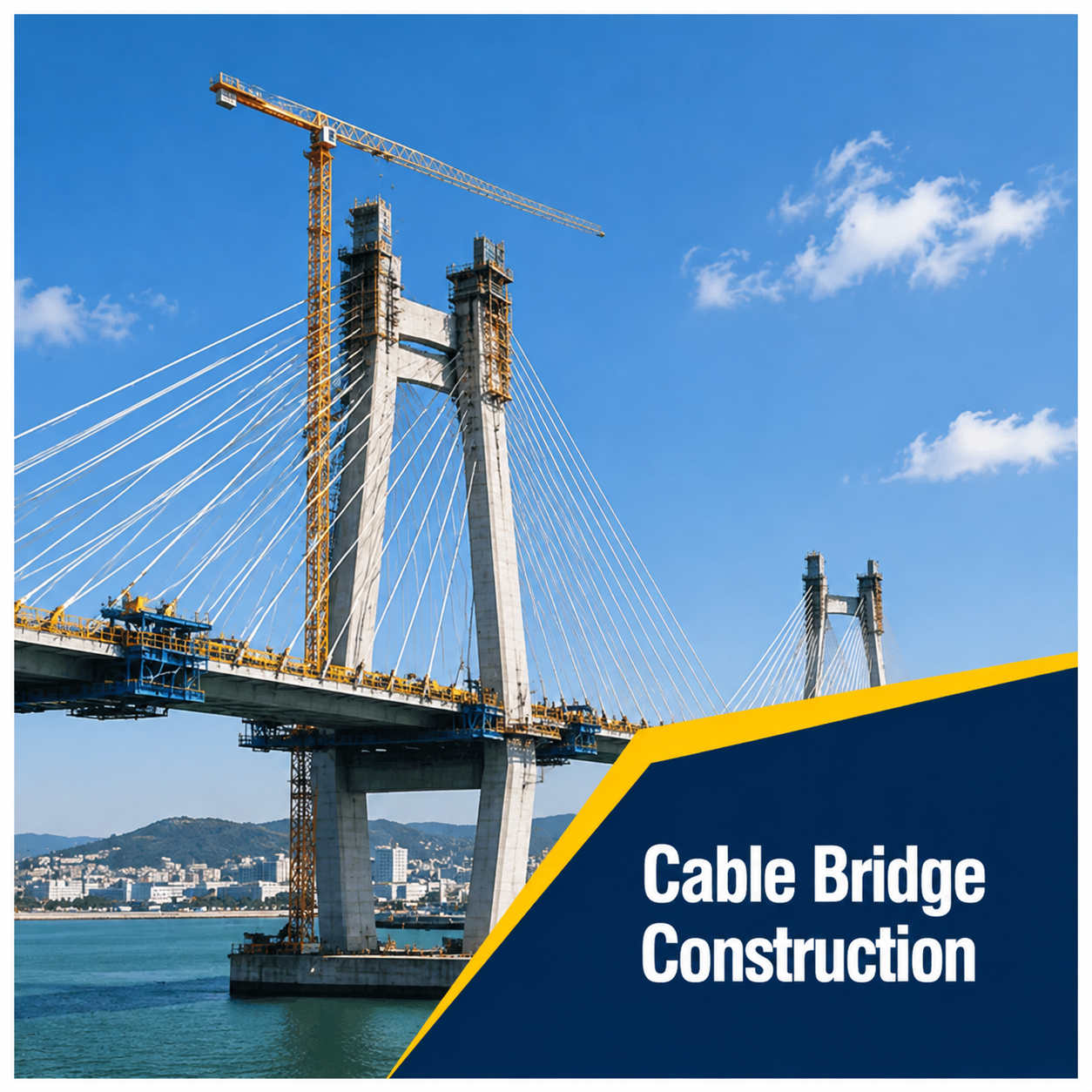
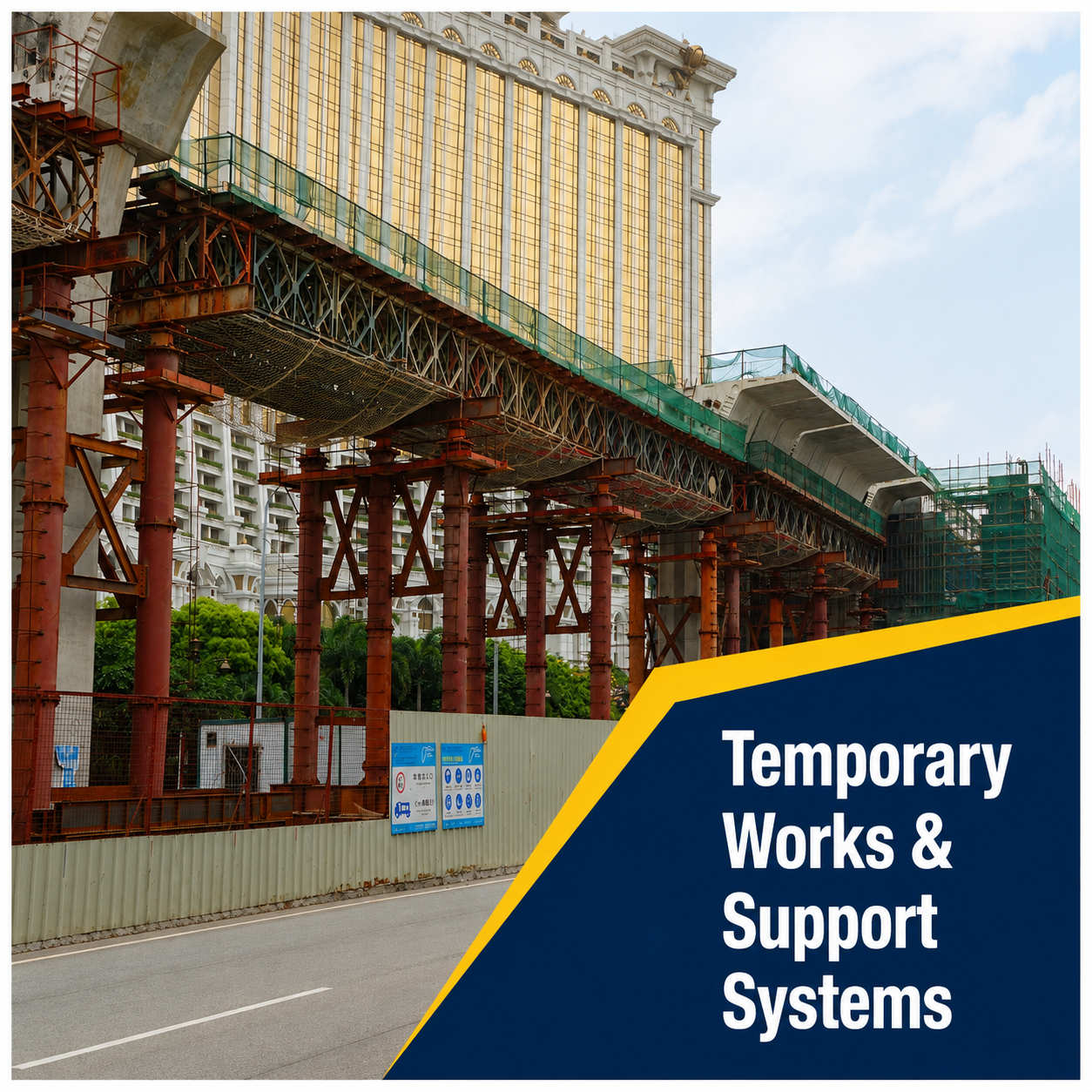
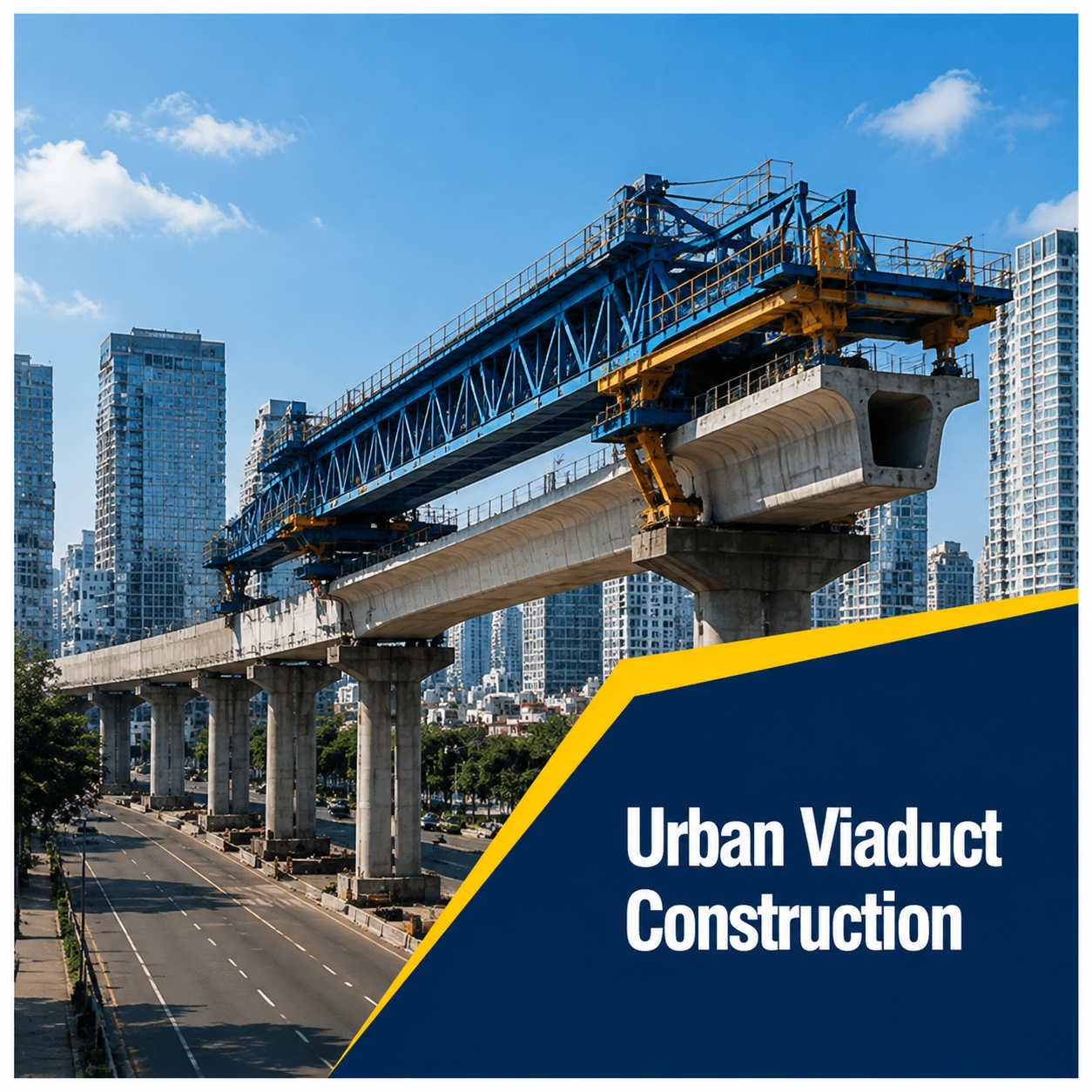
Bridge Construction Hub provides engineering knowledge, construction equipment, and procurement solutions covering every stage of railway bridge construction — from foundation works to precast girder erection, segment construction, track installation, and final railway operation.
1. Site Preparation
Overview
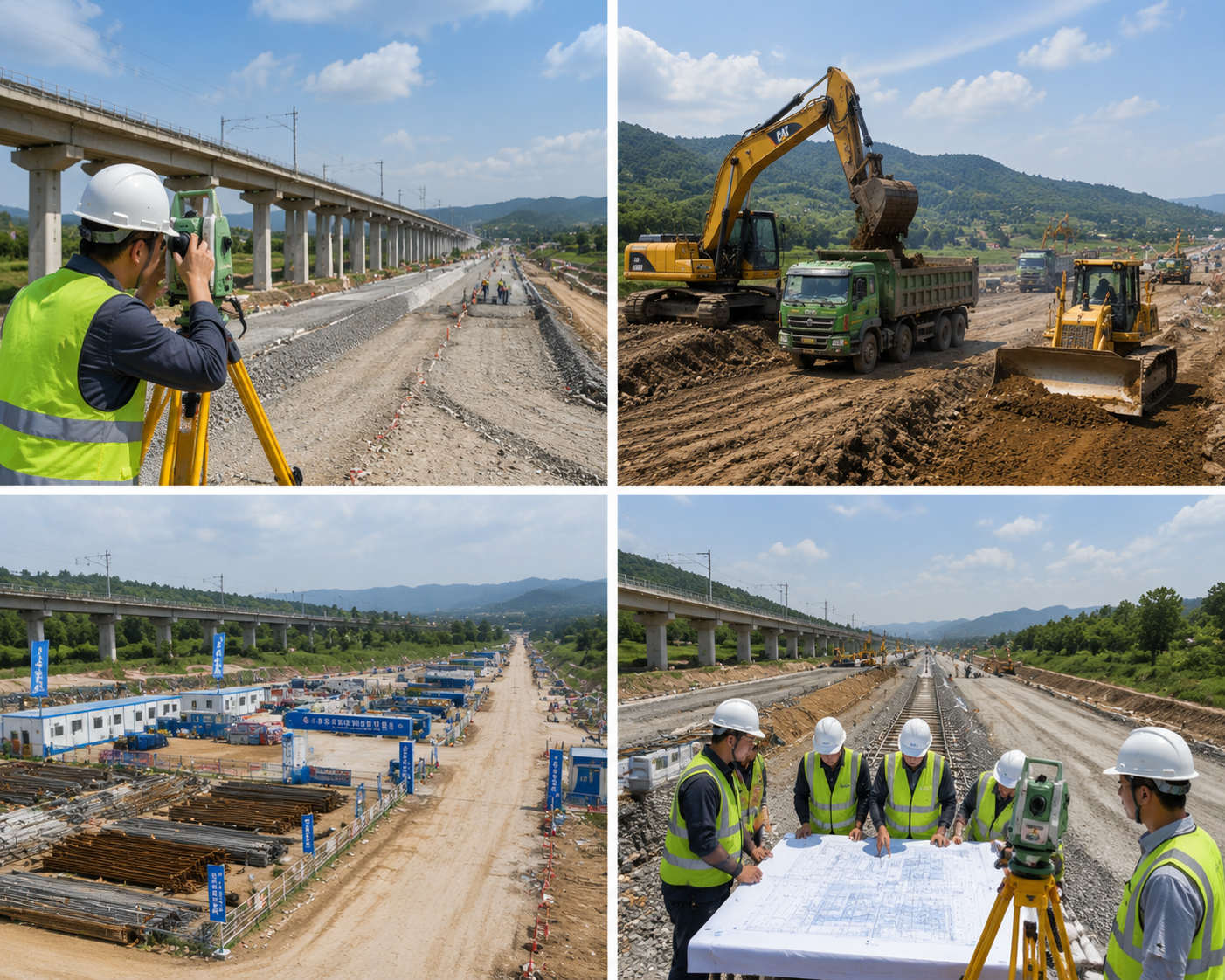
Site preparation is the first stage of railway bridge construction. Engineers establish construction access, perform detailed surveying, prepare temporary facilities, and organize construction areas for heavy equipment and material transportation.
Because railway projects require extremely high alignment accuracy, precise surveying and construction control are essential from the beginning.
Key Activities
Topographic Survey
Railway Alignment Survey
Site Clearing
Temporary Access Road Construction
Construction Yard Setup
Temporary Drainage
Material Storage Area Preparation
Construction Layout
Main Equipment
Excavators
Bulldozers
Motor Graders
Rollers
Dump Trucks
Survey Instruments
GPS Positioning Equipment
Main Materials
Aggregate
Temporary Fencing
Geotextile
Drainage Pipes
Temporary Facilities
2. Foundation Construction
Overview
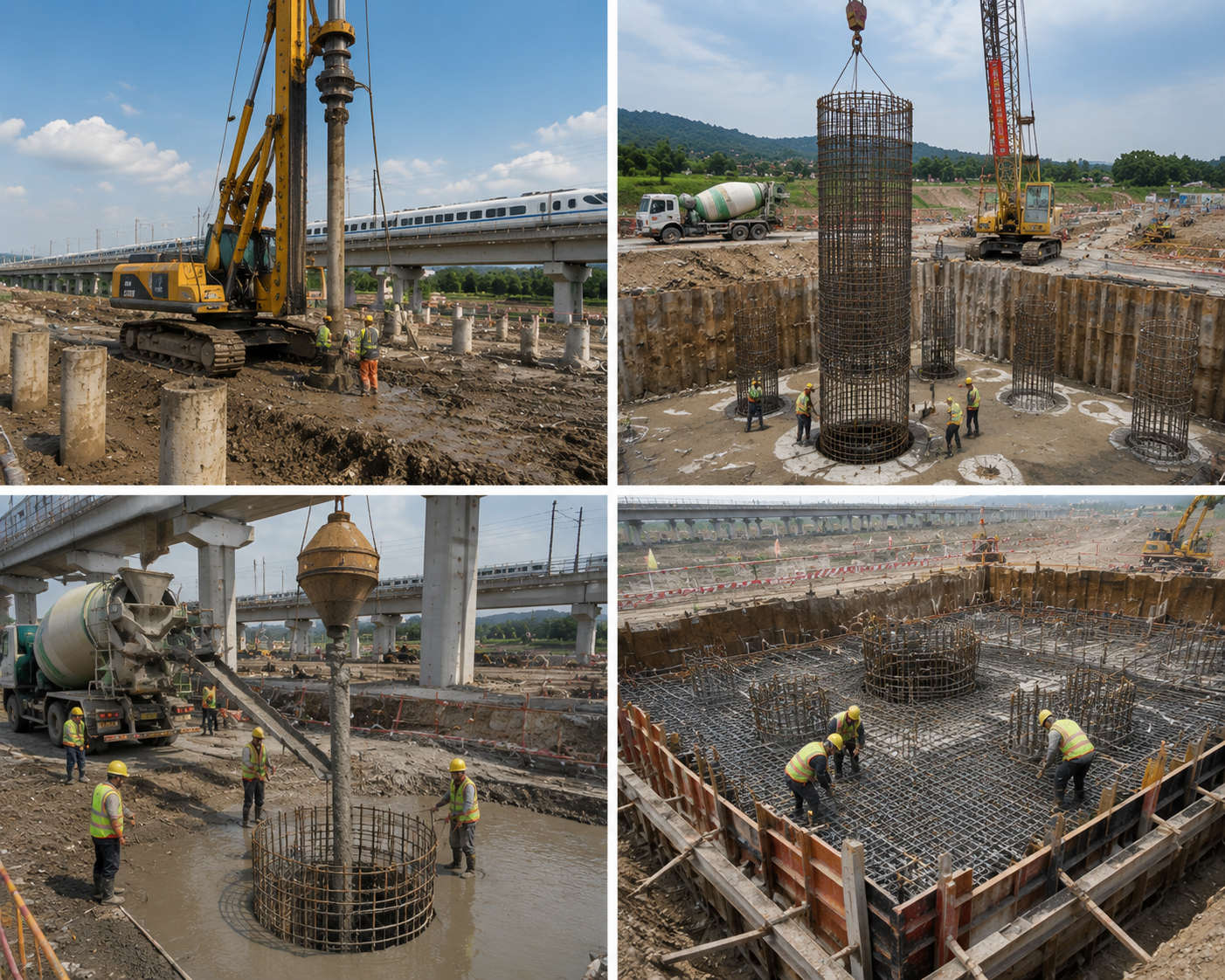
Railway bridge foundations transfer the structural loads from piers and superstructures safely into the ground.
Depending on geological conditions, bored piles, driven piles, or pile foundations are commonly used. High-quality foundation construction ensures bridge stability and minimizes settlement that could affect railway operation.
Key Activities
Geological Investigation
Bored Pile Drilling
Reinforcement Cage Installation
Concrete Pouring
Pile Integrity Testing
Pile Cap Construction
Foundation Inspection
Dewatering
Main Equipment
Rotary Drilling Rig
Crawler Crane
Concrete Pump
Tremie Pipe
Excavator
Rebar Processing Equipment
Main Materials
Reinforcing Steel
Concrete
Cement
Bentonite Slurry
Anchor Bolts
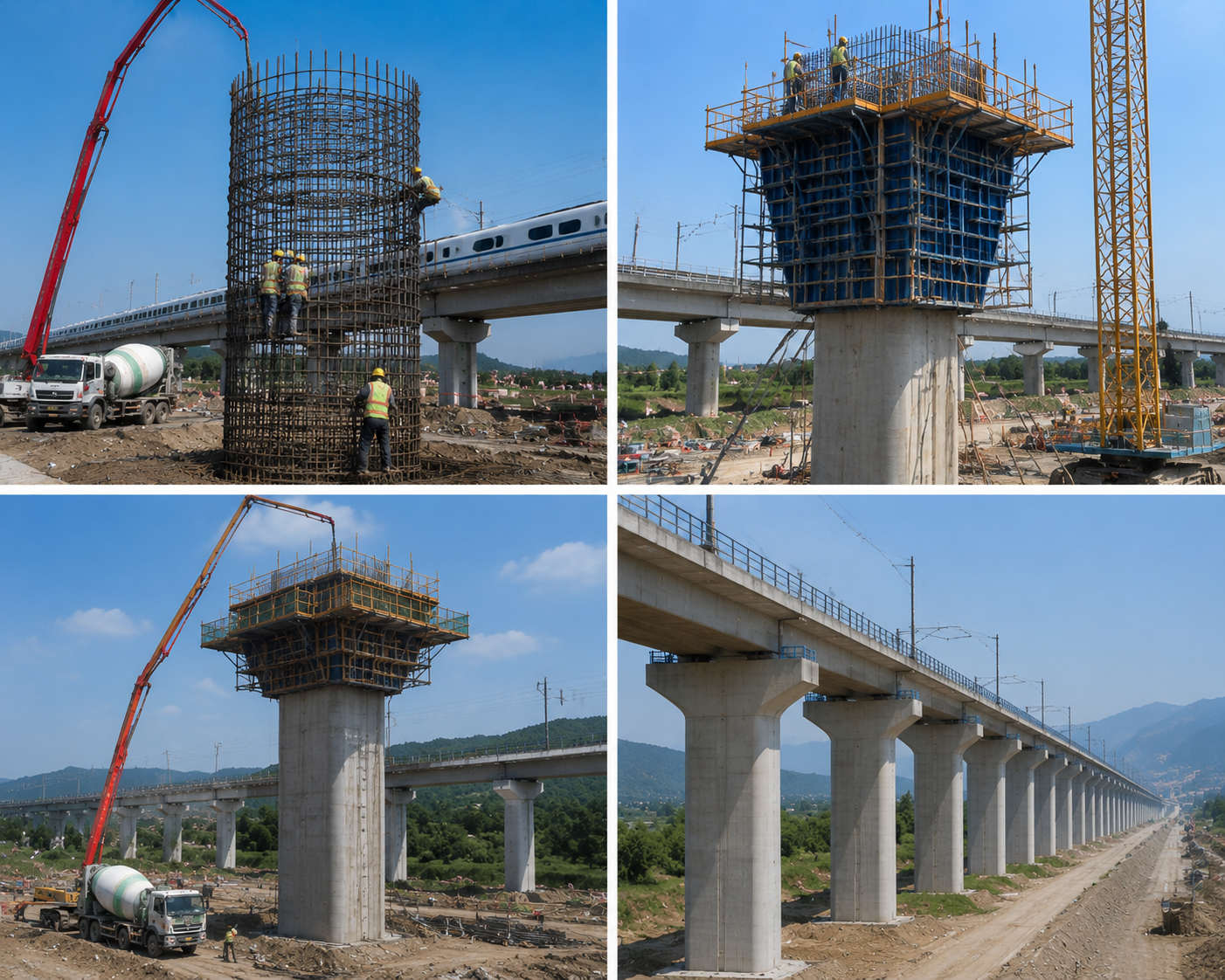
3. Pier Construction
Overview
Railway bridge piers support the bridge superstructure and maintain accurate track elevation and alignment.
Due to strict railway operation requirements, pier construction requires precise vertical control, high-quality concrete, and reliable structural performance.
Key Activities
Reinforcement Installation
Formwork Assembly
Concrete Casting
Concrete Curing
Pier Alignment Control
Bearing Pedestal Construction
Quality Inspection
Main Equipment
Tower Crane
Concrete Pump
Concrete Vibrator
Scaffolding System
Formwork System
Survey Equipment
Main Materials
Reinforcing Steel
High Performance Concrete
Formwork Panels
Bearing Plates
Anchor Bolts
4. Girder Installation
Overview
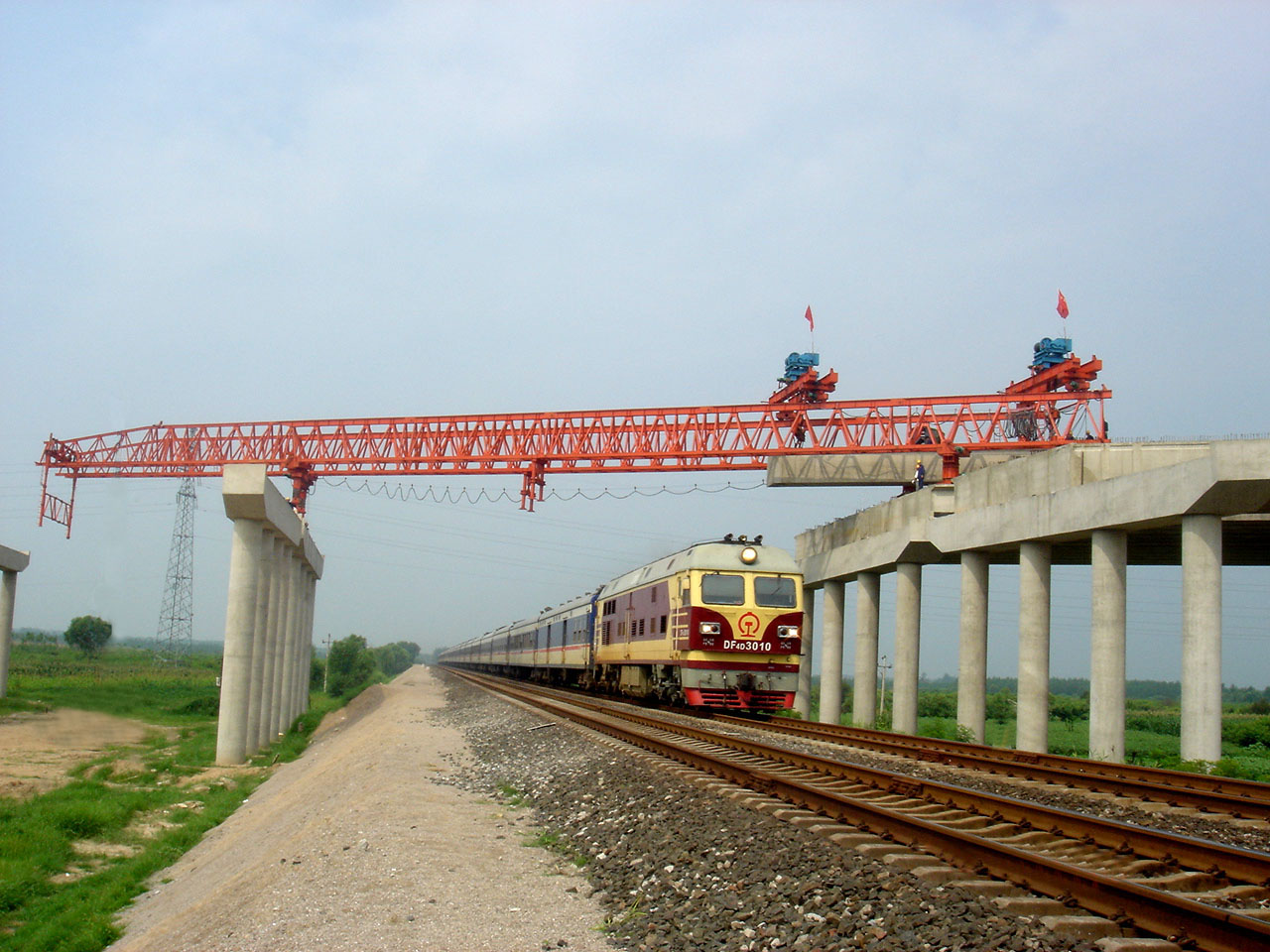
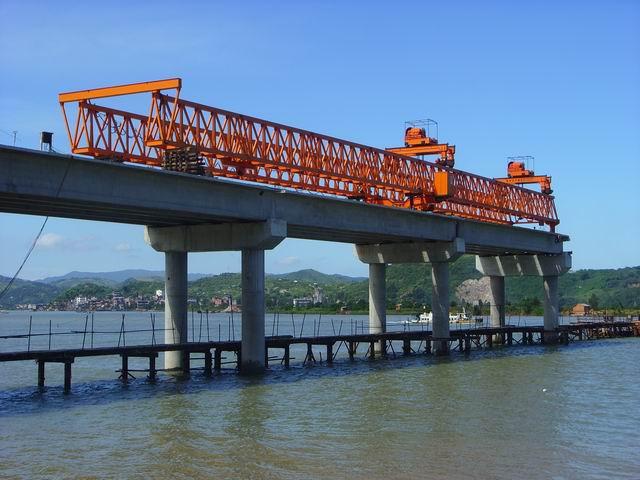
Girder installation is one of the most important stages of railway bridge construction.
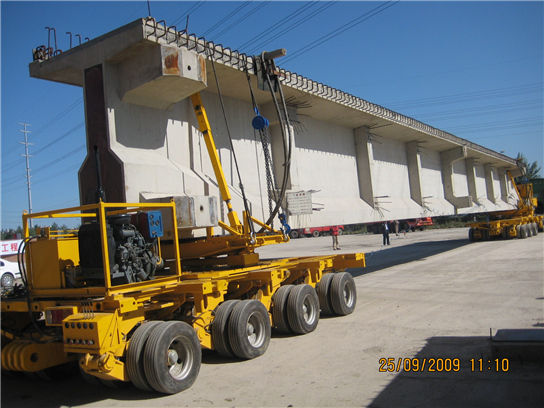
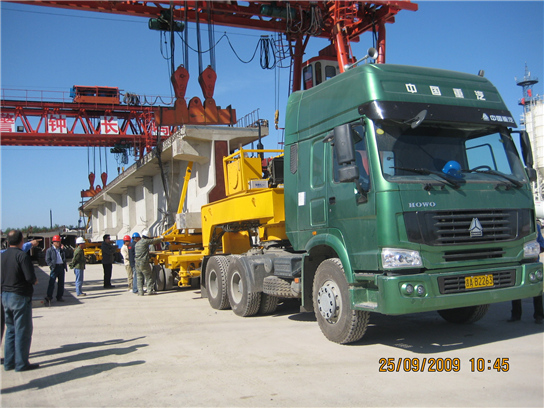
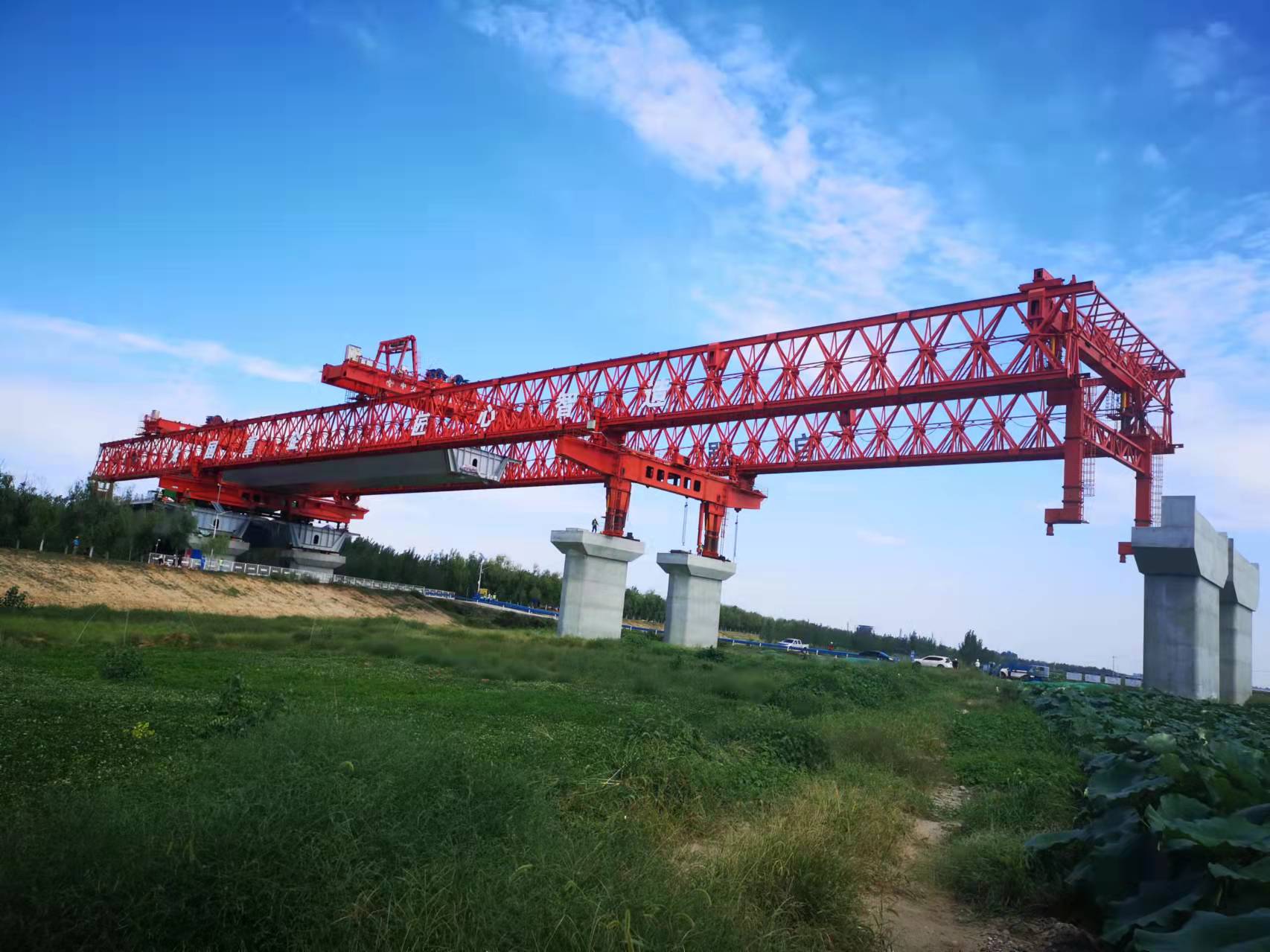
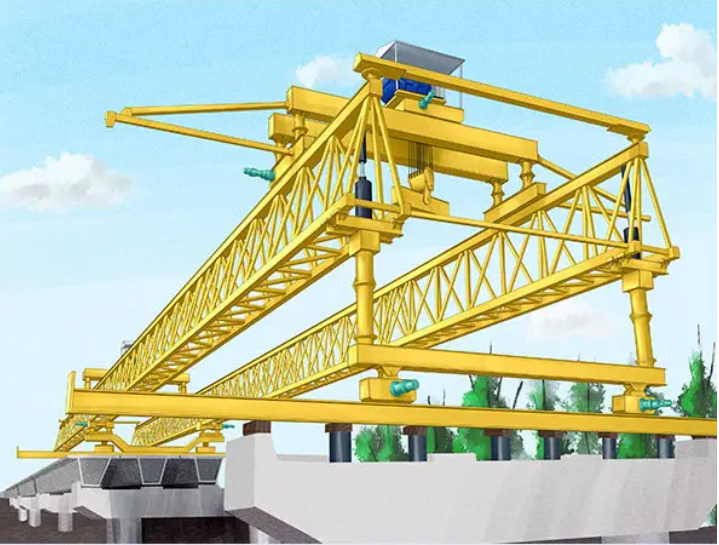
Railway bridges commonly use precast girders or segmental construction methods. Precast elements are manufactured under controlled conditions and transported to site for installation using launching gantries, cranes, or specialized erection equipment.
High precision during girder erection ensures correct railway alignment and structural safety.
Key Activities
Precast Girder Production
Segment Fabrication
Girder Transportation
Launching Gantry Installation
Girder Lifting
Segment Assembly
Alignment Adjustment
Temporary Fixing
Main Equipment
Launching Gantry
Gantry Crane
Transport Trailer
Hydraulic Jack
Strand Jack
Survey Equipment
Main Materials
Precast Concrete Girder
Segment Components
Bridge Bearings
High Strength Bolts
Epoxy Adhesive
Grouting Material
5. Prestressing
Overview
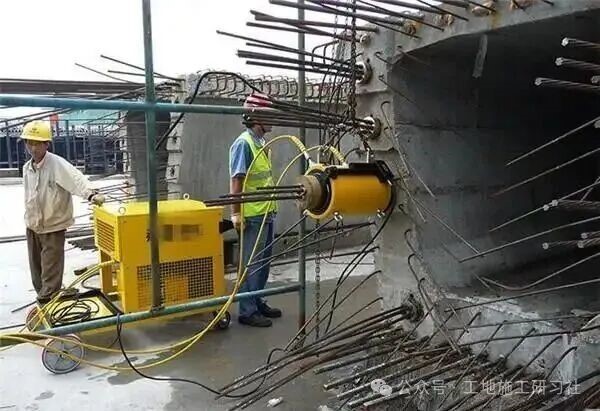
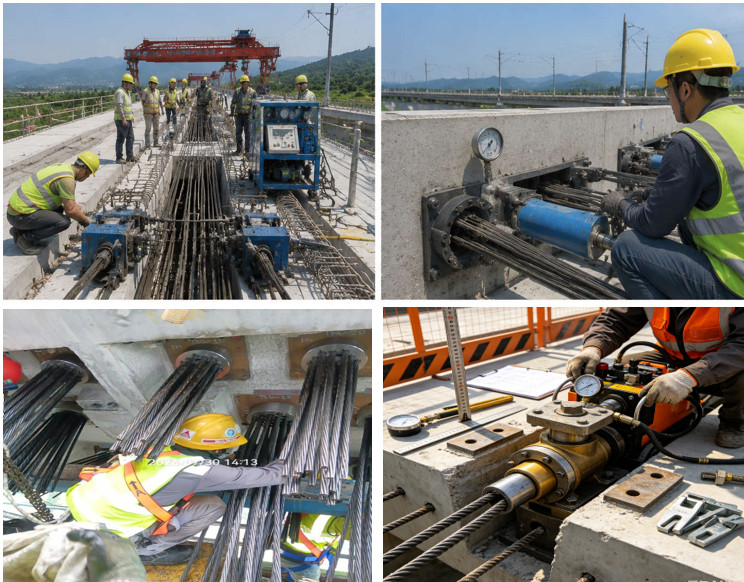
Prestressing improves the load capacity, crack resistance, and durability of railway bridge structures.
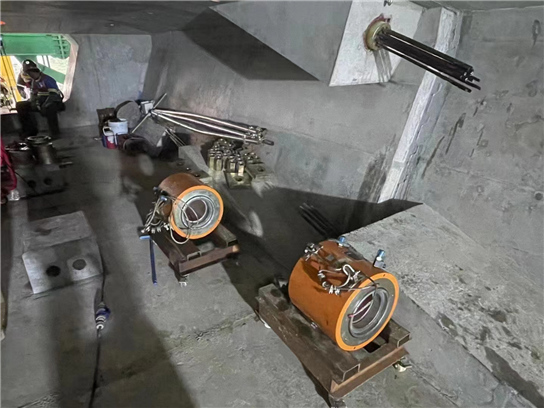
Steel strands are tensioned using hydraulic stressing equipment and anchored permanently inside the girder or segment structure.
Accurate stressing control is essential because railway bridges require long-term stability under repeated train loading.
Key Activities
Tendon Installation
Prestressing Strand Installation
Hydraulic Stressing
Elongation Measurement
Anchorage Installation
Duct Grouting
Stress Verification
Main Equipment
Hydraulic Jack
Hydraulic Pump
Stressing Equipment
Grouting Pump
Pressure Monitoring Equipment
Measuring Instruments
Main Materials
Prestressing Steel Strand
Anchorage System
Wedges
HDPE Duct
Grouting Material
6. Deck Construction
Overview
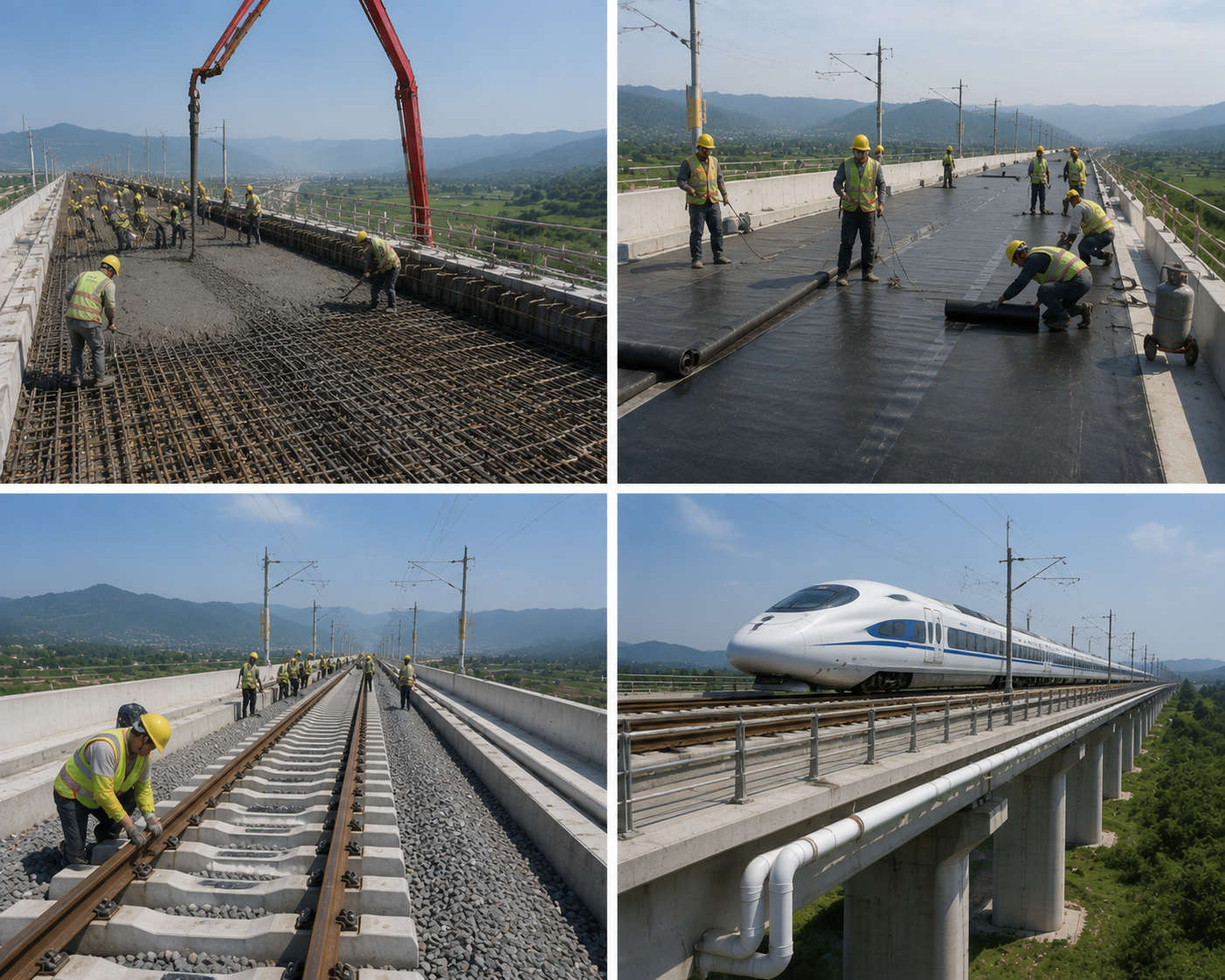
Railway bridge deck construction provides the supporting structure for railway tracks and ensures smooth train operation.
The work includes deck slab construction, waterproofing, track bed preparation, drainage installation, and safety protection systems.
Precise construction quality directly affects railway riding comfort and operational safety.
Key Activities
Deck Reinforcement
Concrete Pouring
Waterproofing
Track Bed Construction
Drainage Installation
Parapet Construction
Track Support Installation
Main Equipment
Concrete Pump
Concrete Finishing Machine
Crane
Survey Equipment
Grinding Equipment
Main Materials
Concrete
Waterproof Membrane
Track Slab
Drainage Pipe
Expansion Joint
Protective Layer Materials
7. Completion
Overview
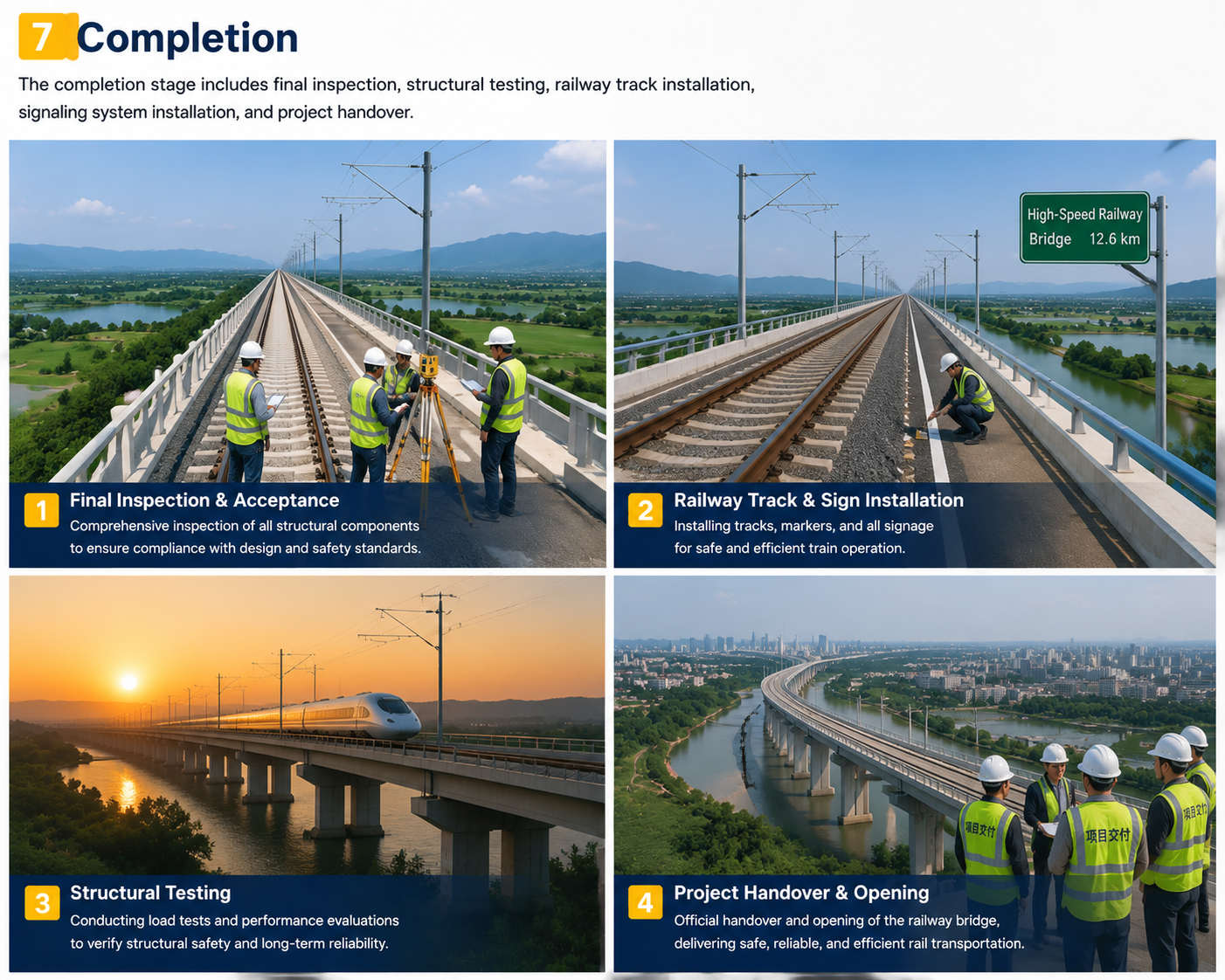
The completion stage includes final inspection, structural testing, railway track installation, signaling system installation, and project handover.
Engineers verify that the railway bridge meets design requirements, safety standards, and operational conditions before opening for train service.
Key Activities
Final Structural Inspection
Load Testing
Track Installation
Railway Alignment Check
Electrification Installation
Signal System Testing
Project Handover
Main Equipment
Inspection Vehicle
Survey Equipment
Track Testing Equipment
Load Testing Equipment
Access Platform
Main Materials
Railway Track Components
Signal Equipment
Expansion Joint System
Safety Barriers
Protective Materials